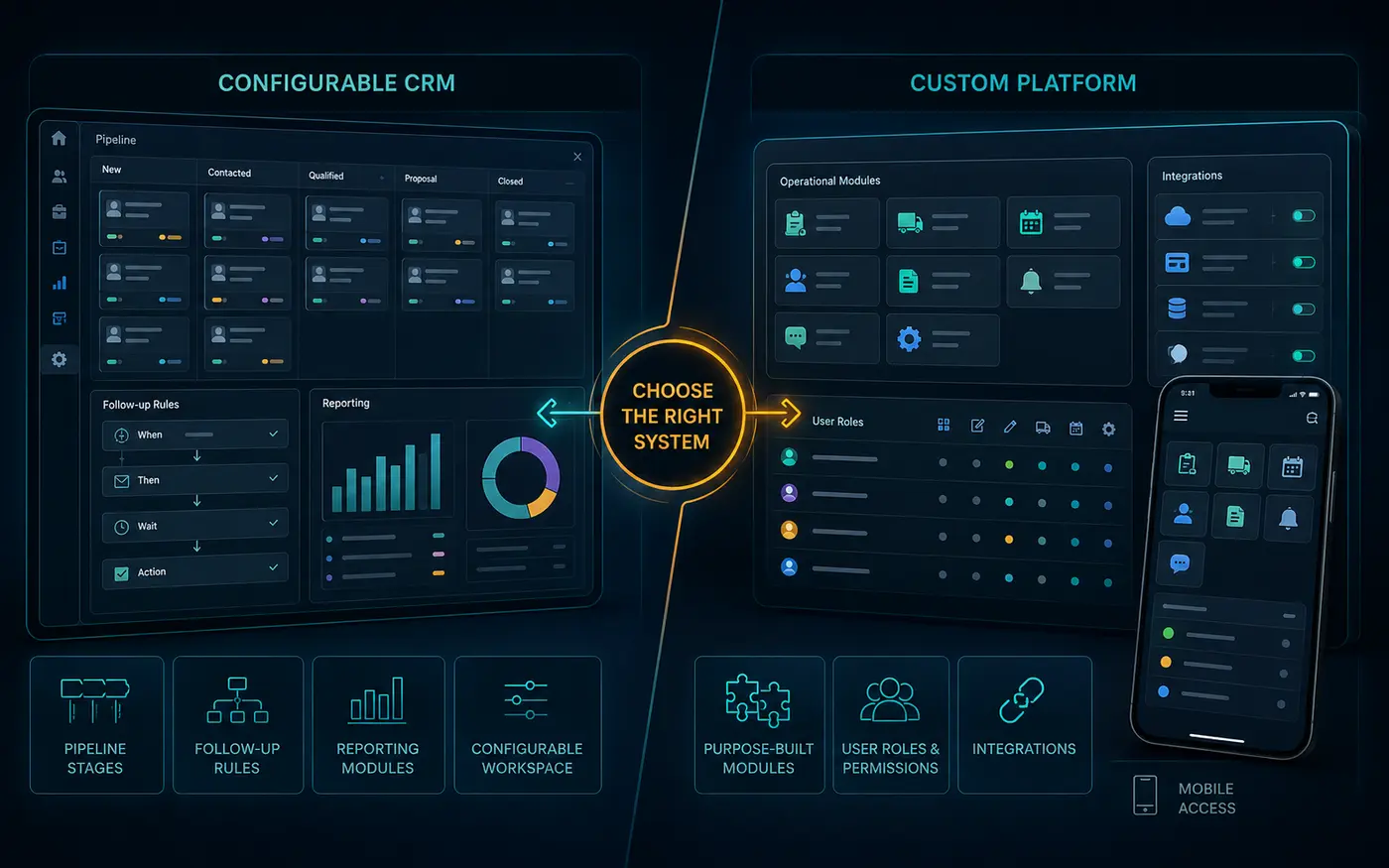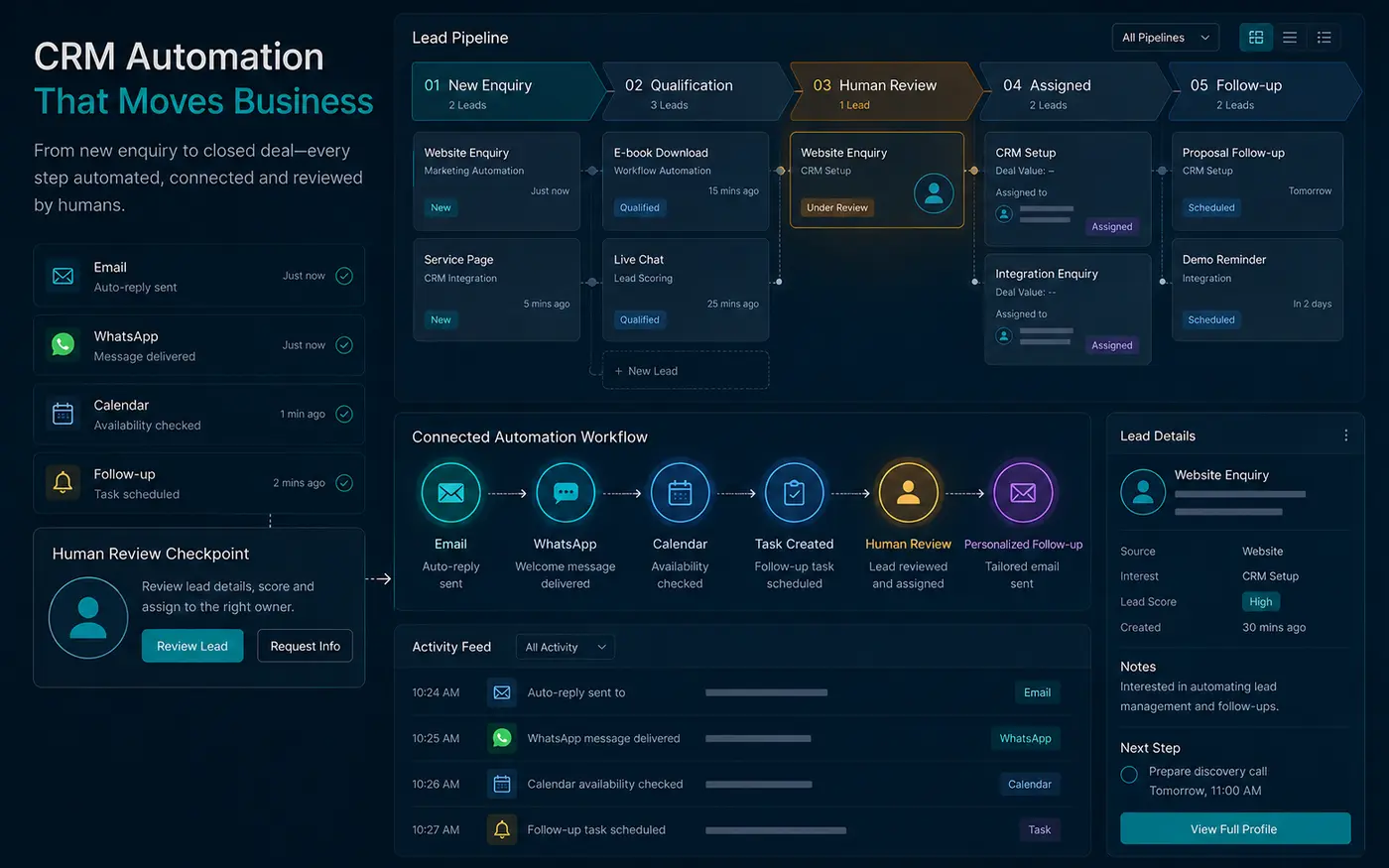

A digital diagnosis is the decision stage before production. Its purpose is not to create a longer wish list. It should identify the business constraint worth solving, show what evidence supports that conclusion and define the smallest responsible first phase.
Businesses often arrive with several reasonable ideas: rebuild the website, improve search visibility, automate follow-up, launch a portal or produce more content. Starting all of them at once spreads budget and ownership across too many moving parts. A useful diagnosis creates sequence.
1. Name the commercial constraint
The first question is not “Which service do we want?” It is “What condition is stopping progress?” Weak demand, poor conversion, manual operations and missing product infrastructure require different responses. The diagnosis should state one primary constraint in plain business language and explain why it matters now.
Low enquiry volume can be a visibility problem, but it can also come from unclear positioning, weak proof, a confusing website or slow lead handling. Treating every low-enquiry situation as an advertising problem can buy more traffic for a journey that is not ready to convert.
2. Separate symptoms from causes
A symptom is observable: traffic is low, leads are unqualified, follow-up is inconsistent or staff repeat the same task. A cause explains why. Diagnosis should compare plausible causes using available evidence rather than accepting the first explanation.
Useful inputs include stakeholder interviews, customer questions, search performance, page behaviour, lead records, sales feedback, current workflows and technical constraints. The evidence will not always be complete. The roadmap should clearly distinguish what is known, what is inferred and what still needs to be tested.
3. Choose one primary route
Digi Rehbar organises digital work around four routes: Attract, Convert, Operate and Build. A diagnosis should choose the route that leads the first phase. Supporting work is included only when it directly helps the same objective.
This prevents a common scope problem: a website project quietly becoming a rebrand, content programme, CRM migration and custom software build at the same time. Those needs may all be valid, but they need an order and a reason.
4. Define the audience and decision
Every acquisition or conversion project needs a priority audience. The roadmap should record what that audience is trying to decide, what they already understand, what creates doubt and what evidence would make the next action feel reasonable.
For an operational project, the equivalent is a user and ownership map: who performs each step, which information they require, what exceptions occur and who is accountable when the standard path fails.
5. Audit existing assets before replacing them
A responsible diagnosis protects what already works. Existing URLs may have search value. A page may convert well even if its design feels dated. A spreadsheet may contain the clearest version of a workflow. A CRM may be suitable but poorly configured.
The roadmap should identify which assets to retain, improve, migrate or retire. Replacement is justified by a constraint, not by the novelty of starting again.
6. Define success signals and ownership
Success needs observable signals connected to the primary route. These might include relevant search impressions, qualified landing-page visits, completed project briefs, faster first response, fewer manual handoffs, successful onboarding or reliable reporting. The exact measures depend on the project and the data available.
Each measure needs an owner, a source and a review rhythm. Without ownership, even a well-designed dashboard becomes another screen that nobody uses to make decisions.
7. Identify dependencies and risk
The diagnosis should record the information, approvals, access, content, integrations and policy decisions needed for delivery. It should also identify the riskiest assumption. If the project depends on an integration, unusual permission model or unclear customer behaviour, test that uncertainty before committing to the full build.
8. End with the smallest useful first phase
The output should recommend a concrete next step: a positioning sprint, search opportunity review, conversion audit, workflow prototype, CRM configuration phase or product discovery stage. It should explain what will be delivered, which question it answers and what decision follows.
The Digital Diagnosis & Roadmapping service is designed for this stage. If several digital priorities are competing for attention, share the current goal through the project brief. The response is human-reviewed, and the first recommendation should make the next decision smaller and clearer.